Telescoping Bridge Cranes: Extending Reach Beyond Standard Runway Limits
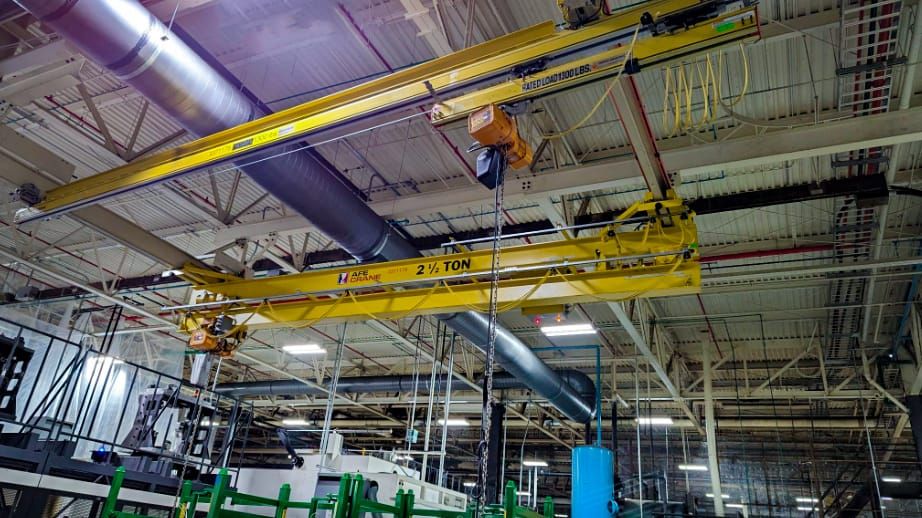
Most overhead crane systems move loads across a fixed rectangular area. For many applications, that works well. But what happens when a load needs to go somewhere the crane simply can’t reach?
This is where telescoping bridge cranes come into play—an innovative solution that extends beyond the limits of traditional overhead systems and solves problems that many facilities don’t initially realize have a solution.
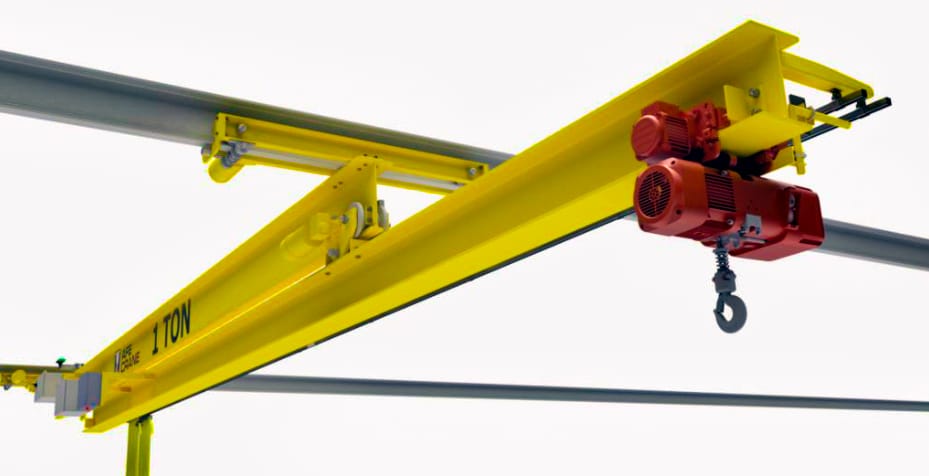
What Is a Telescoping Bridge Crane?
A telescoping, or projecting, bridge crane is a type of overhead system designed with an extendable bridge that can move beyond the standard runway span. Instead of being confined to a fixed working area, the bridge can telescope outward, allowing the hoist to reach into areas that would otherwise be inaccessible.
This added range opens up new possibilities for material handling, especially in facilities where layout constraints limit traditional crane coverage.
The Problem Most People Don’t Realize Exists
In many manufacturing and industrial environments, there are areas where material needs to be moved—but a standard overhead crane cannot reach. These situations often occur near:
- Bays or stations located beyond the runway
- Areas obstructed by structural columns or equipment
- Subassembly workstations offset from the main crane path
- Loading zones that extend outside the main crane footprint
In these cases, facilities often rely on alternative methods such as forklifts or manual handling, even when those methods are less efficient or introduce additional safety concerns.
How Telescoping Bridge Cranes Solve It
A telescoping bridge crane addresses this limitation by allowing the bridge to extend into those hard-to-reach areas. This means:
- Loads can be positioned exactly where they are needed
- Operators can maintain control using the same crane system
- Facilities can avoid redesigning layouts or adding separate lifting equipment
Instead of working around the limitations of a fixed system, the crane adapts to the workflow.
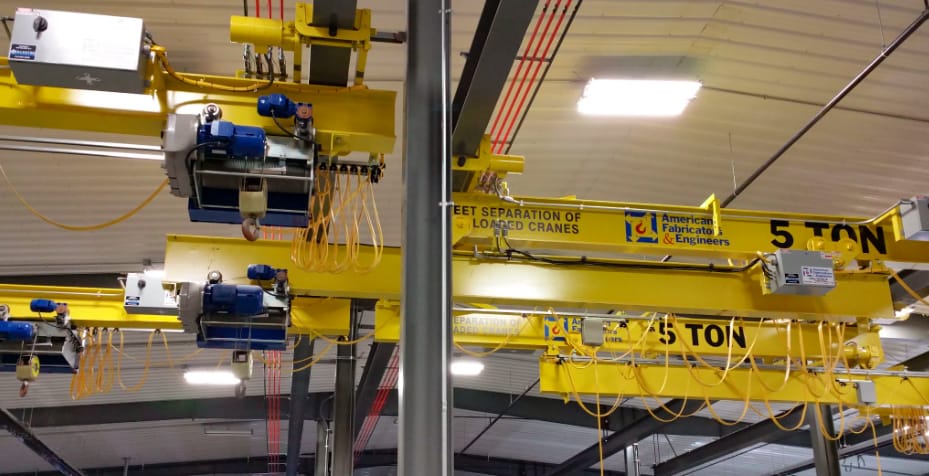
Where You Might See This in Action
While not as widely known as standard overhead bridge cranes, telescoping systems are used in a variety of applications where reach is critical.
Examples include:
- Manufacturing cells where parts need to be placed into machines or fixtures beyond the main span
- Maintenance areas where equipment must be serviced in tight or obstructed spaces
- Facilities with existing structures that limit where runway systems can be installed
In each of these scenarios, the ability to extend the bridge provides flexibility that would otherwise require additional equipment or process changes.
Why Engineers Choose Telescoping Designs
From an engineering perspective, telescoping bridge cranes are often selected when the application demands more than what a standard configuration can provide.
Rather than modifying the building or adding multiple systems, a telescoping design allows engineers to:
- Maximize coverage within existing constraints
- Improve workflow by reducing unnecessary material movement
- Maintain a single, integrated lifting solution
This approach aligns with a broader shift toward designing systems around real-world applications instead of forcing the application to fit the equipment.
A Simple Idea That Solves a Complex Problem
At a glance, the concept of a telescoping bridge may seem straightforward. But in practice, it represents a thoughtful solution to a common challenge in industrial environments—getting materials exactly where they need to go without adding complexity.
By extending the reach of an overhead system, telescoping bridge cranes provide a way to improve efficiency, reduce reliance on secondary equipment, and enhance overall workflow.
Featured Podcast: Custom Overhead Bridge Cranes: Solving Unique Production Challenges Through Engineering
Final Thoughts
Not every facility requires a telescoping bridge crane. But for operations facing reach limitations or layout constraints, it can be a highly effective solution that is often overlooked.
Thank you for taking the time to explore this unique approach to overhead lifting. If you are evaluating a lifting application and suspect there may be areas your current system cannot reach, working with an experienced team like AFE Crane can help identify whether a telescoping solution is worth considering.
Article Credits & Author Biography
Many thanks to Emily Carrier, Sales and Marketing Manager at AFE Crane. With a background in mechanical engineering and experience working directly with customers to define overhead lifting system requirements, she brings a practical, application-focused perspective to crane design. If you are evaluating a lifting application or planning a new system, her team can help you define the right solution early in the process.